(As most of my other recent posts, this one has been written with AI assistance. In this one in particular I used Gemini, ChatGPT and Hermes agent)
I have been writing in public for most of my adult life. I have published scientific papers for nearly 30 years, kept this blog going for 16, and written Quora answers (by hand) with close to 70 million views. Some of the answers people read most weren’t technical at all but rather on topics such as running.
Writing is how I communicate, obviously, but it is also how I work out what I want to say. Often I don’t know exactly what I think until I put it into words. This is why I have been following the recent debate over AI writing closely. I don’t agree with those who treat any use of AI as if it were the same thing: asking a model to help reorganize an argument is not the same as asking it to generate an argument you never had.
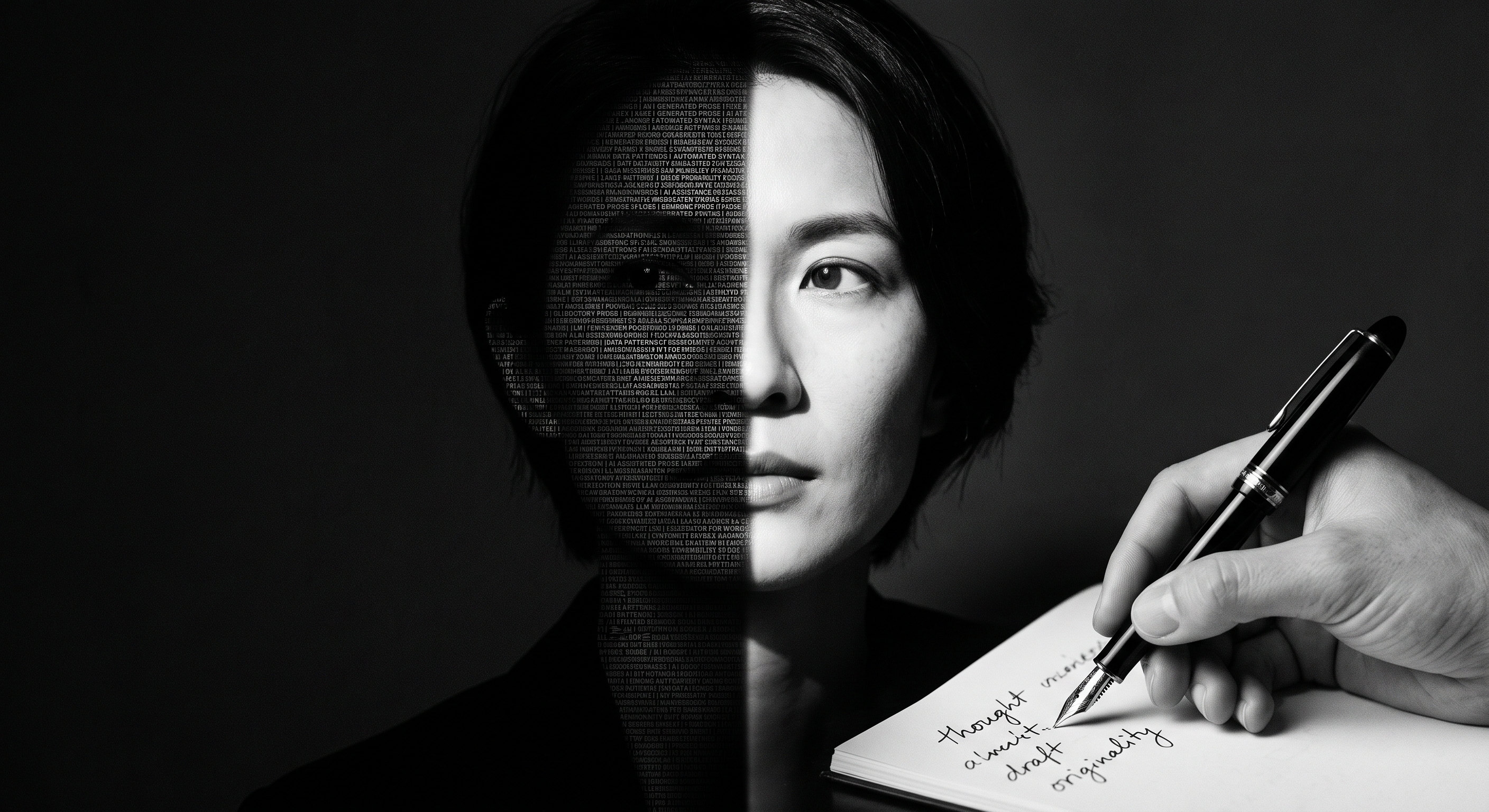
A calculator for words?
AI assistance is extremely useful for writing. Period. This is especially true for people writing in a second language, or for anyone who has something useful to say but struggles with grammar and structure. A tool that helps people express what they have to say more clearly is a net positive. In my research career, I have reviewed plenty of research papers where the work was interesting and the prose made it almost impossible to see why.. Today that friction is not only avoidable, but I have come to expect it. If I come across a poorly written paper, I can’t help but wonder why the authors did not use AI assistance.
The recent argument over Stanley Druckenmiller’s AI-drafted op-ed made headlines, after which the Wall Street Journal defended publishing it. I am less scandalized by this than some people seem to be. Public figures have always used editors, researchers, and speechwriters. I care more about whether Druckenmiller supplied the ideas, checked what appeared under his name, and could defend it afterward. The Journal’s disclosure rules matter too, of course. But the fact that he did not type every sentence is not, by itself, the interesting part.
Druckenmiller’s calculator analogy is tempting: let the machine handle the mechanics so the person can concentrate on the problem. I think there is something to it. AI-assisted writing will become routine, and in some settings it already is. Still, words are not arithmetic. A calculator gives you an answer to a formal operation, and you can check it. Editing an argument is messier though. A change in the wording may also change the emphasis, soften a caveat, or sneak in a claim the author never intended to make. Models do this fluently, which is part of the danger. They can also water down whatever was distinctive in the original until every piece sounds competent and strangely familiar.
Slop was here before the models
The most valid criticism of the role of AI in slop is about scale. Producing plausible text now costs almost nothing, so we are getting an astonishing amount of material that nobody wanted to write and nobody wants to read.
That is slop. It exists because producing another page is cheap, not because somebody had a reason to publish one. The grammar may be flawless. The tone may sound confident. There is just no judgment behind it and no concern for the reader’s time. LLMs made this much easier, but they did not invent it. We had content farms, SEO filler, corporate jargon, formulaic academic prose, and empty “thought leadership” long before ChatGPT. Humans are perfectly capable of producing slop. It also means that AI involvement does not automatically make a piece worthless. Both shortcuts are lazy.
When I read something, I want to know whether it is true and whether there is an idea in it. Did I learn anything? Would the named author defend the claims? Those questions tell me more than the provenance of each sentence.
The detector detour and the watermarking trap
Fear of AI slop has created a market for detectors. AI detectors have many flaws (pages such as this one by the University of San Diego or this other one by Illinois State University do a good job at summarizing the many reasons for that) My own informal experiments with them have not inspired much confidence. I have watched AI-generated writing receive a relatively low probability while structured text written by a person was labeled entirely AI-generated. That is an anecdote, not a benchmark. It does point to a problem, though: even a perfect detector would often answer a question that has no clean boundary.
Imagine that I develop a thesis and outline, ask a model for a draft, delete half of it, and rewrite the rest. Or I write the draft myself and use a model to rearrange it. Which percentage was “written by AI”? Real writing workflows now occupy every point between those examples. A single number pretends the boundary is sharper than it is.
Studies already suggest that people perform little better than chance when identifying generated text. Automated detectors may do better under particular test conditions, but neither kind of detector can tell whether the argument is correct, interesting, or useful.
But beyond the fact that AI is largely undetectable, we should ask why we want to detect it in the first place, and whether it actually matters.
This brings us to the recent controversy around Anthropic implementing invisible watermarking for Claude in response to EU regulations. Ben Thompson at Stratechery recently dismantled this approach, pointing out the philosophical absurdity of the premise. As Thompson rightly asked: what exactly is “fake”? If an LLM states a verifiable fact, and a human writes a complete fable, does it matter that the human’s fable doesn’t have a watermark?Thompson argues that insisting an AI watermark itself is no different than insisting a ballpoint pen advertise itself as the author. He is exactly right.
There are places where the use of AI is banned, regardless of how that might impact quality. A school, journal, competition, or employer can set rules about acceptable assistance. Then the issue is compliance. Even there, a probability score should not be treated as proof, particularly when the consequences are serious.
What authorship requires
In my opinion, our concern should not be that AI will improve our emails or help clean up a blog post but rather whether people will stop doing the thinking and still claim the result as their own. I argued in a previous post that writing is often part of thinking. AI doesn’t necessarily remove that process. Used well, a model can challenge an assumption, find an ambiguity, or suggest a structure I had not considered. A colleague or editor can do the same thing. I still have to decide whether the suggestion is any good.
For me, authorship comes down to agency and accountability. The author decides why the piece should exist, checks the facts, makes the choices that shape the argument, and owns the result. There is a practical test. Can you explain the argument without reading the generated text? Can you say why one claim stayed and another was removed? Can you defend the factual assertions and accept responsibility for an error? If not, the model did more than assist you. Saying “the AI wrote it” after publication is no more convincing than blaming an editor whose changes you approved.
Disclosure is harder to reduce to one rule. We don’t list every use of spellcheck or every comment from a friend. I would disclose AI use when a publication or institution requires it, when the model materially affects the analysis, or when knowing about its role would change how a reasonable reader interprets the work. The answer depends on the setting. Accountability doesn’t.
Learning the tool without skipping the lesson
Education is where I find the tradeoff hardest. Children need the experience of forming an idea, getting stuck, finding the words, and revising something that does not yet work. They also need to learn how to use AI because it will be part of their professional lives.
Timing matters. Sometimes the struggle is the assignment. Using a model to bypass it defeats the point, much as handing a calculator to a child before they understand arithmetic can leave a hole that becomes obvious later. At a different stage, refusing the tool makes little sense. Students can compare drafts, find unsupported claims, verify sources, and explain why they accepted some suggestions and rejected others. That may require teachers to look at the process and ask students to defend their work instead of grading only the polish of the final document.
AI has made competent prose cheap. It has not made evidence, judgment, or an original point cheap. I am not interested in whether a model wrote a sentence. I want to know who had the thought, who checked it, and who will stand behind it when somebody pushes back.
Comments